How to run a King of the Court padel session

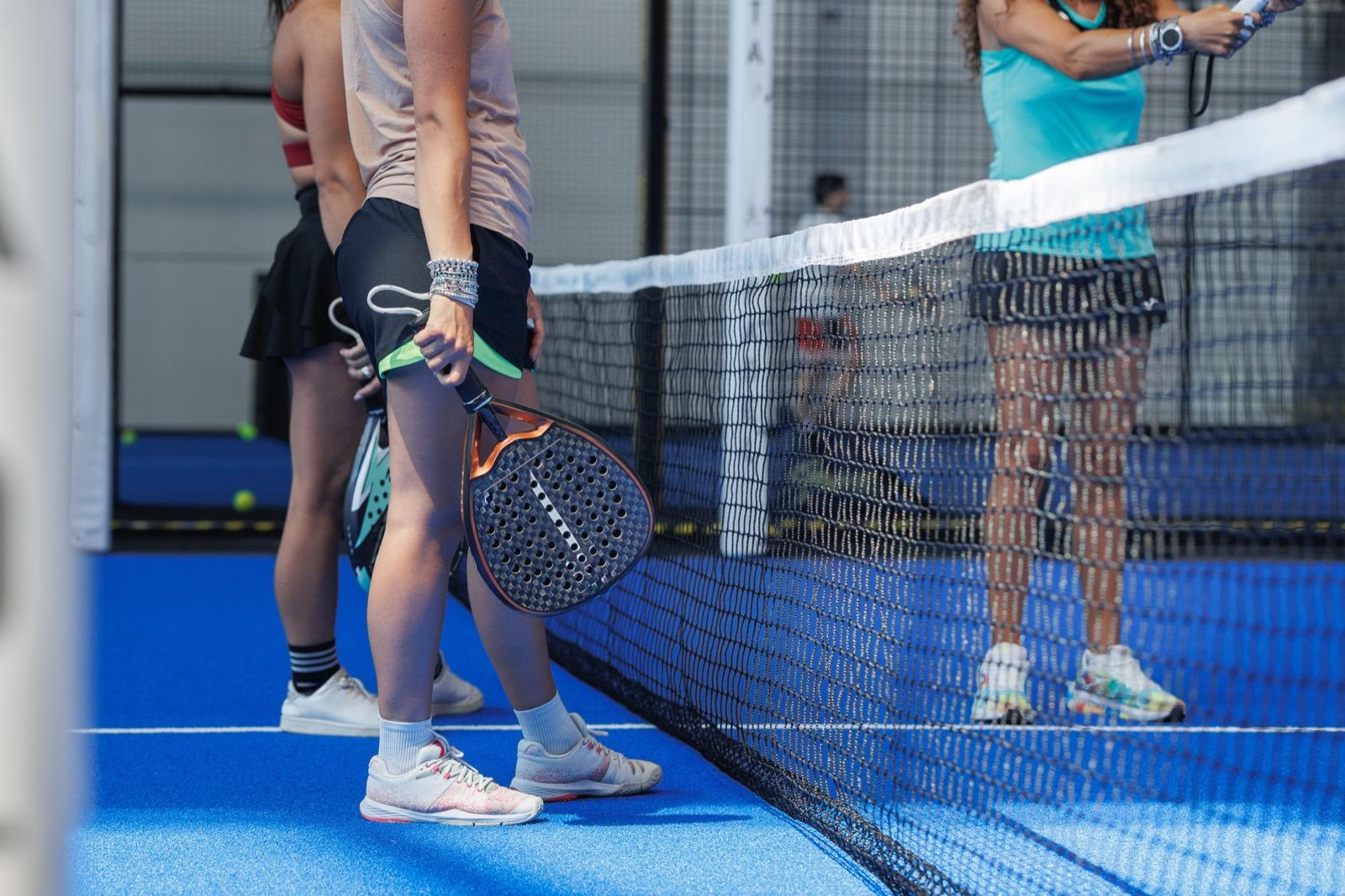
To run a King of the Court padel session, you need at least two courts, short rounds of 8 or 11 points, and a queue: winners move up a court, losers move down, and the pair that loses on the bottom court goes to the back of the queue while the pair at the front comes in. Queen of the Court is the same format.
Pairs stay together. It is loud, it moves constantly, and it is the only format in PadelLoop where somebody can turn up halfway through without breaking anything: a late pair joins the back of the queue. The rules in short are on the King/Queen of the Court page; this guide is about running the session.
In short
- Two courts minimum: on one court there is nowhere to climb to or drop to.
- Rounds of 8 or 11 points, or five to seven minutes; long rounds freeze the ladder.
- One pair leaves per round: the loser on the bottom court goes to the back of the queue, and the front pair comes in.
- A queue of Q pairs means a Q-round wait for a pair that drops out, so keep it to about two.
- Late pairs join the back of the queue while the session runs; nobody on court moves.
How do you run a King of the Court padel session?
- Book at least two courts. Court 1 is the top, the highest number is the bottom.
- Set the round length short. 8 or 11 points, or five to seven minutes.
- Fill the courts from the pair list, two pairs per court, and put the rest in the queue.
- After every round, move everyone. Winners up one court, losers down one; the winner on court 1 stays and takes a crown.
- Swap at the bottom. The losing pair on the bottom court joins the back of the queue, and the front pair comes in.
- Add late pairs to the back of the queue as they arrive, and finish the night when the booking runs out.
Two courts minimum, and why
A King of the Court padel session on one court has nowhere to climb to. You have a series of matches with a queue, which is Winner Stays On, not this.
Two courts give you a top and a bottom and the movement starts working. Three or four give the ladder enough room that a pair can climb over an evening: that arc is what people remember, and it needs somewhere to happen.
Pairs stay together, so the player count has to be even. PadelLoop will not start on an odd number.
Round length is the setting people get wrong
Keep rounds short: 8 or 11 points, or a fixed five to seven minutes.
The movement between courts is the format. If rounds run fifteen minutes the ladder barely moves: over a ninety-minute session you get six rounds, which is not enough for anyone to travel anywhere. The evening becomes a set of separate matches with extra walking.
At 8 points you get a round every six or seven minutes including the changeover, and a pair can cross three courts in an hour. That is the experience the format is for.
If you are used to running Americanos to 24 points, your first King of the Court padel session will feel too short. Run it anyway and watch the room.
Why is the queue the real advantage?
Every other format in PadelLoop locks the player list when you press start. Adding someone means starting over with a longer list, which on a drop-in night means telling a person who just drove across town to sit and watch.
King of the Court has the queue built into the format. Pairs cycle out at the bottom and back in from the front, so you can enter more pairs than the courts hold and everyone still plays. A pair arriving at 19:30 is added with two names under Add a pair while the session runs. It joins the back of the queue and comes in on the bottom court when its turn comes. The round in progress is untouched, and so is every result already entered.
If you set up more courts than the first pairs could fill, say two courts and three pairs, the spare court opens at the next round once two pairs are waiting. Pairs can be added mid-session but not taken out, so a pair that goes home early stays in the rotation until you finish the night.
That makes it the right format for open club sessions, for the hour before a scheduled tournament starts, and for any night where you genuinely do not know how many people are coming.
How the queue actually moves
Say four courts and ten pairs. Courts 1 to 4 have eight pairs on them; two wait.
Each round, the winners on courts 2, 3 and 4 move up one. The losers on courts 1, 2 and 3 move down one. On court 4, the bottom, the losing pair leaves the ladder and joins the back of the queue, and the pair at the front comes in at court 4.
So a pair entering from the queue starts at the bottom and has to win its way up, and a pair that has been losing gradually falls out and gets a rest. Over an hour that produces a rough sorting without anybody keeping a table.
The detail that catches organisers out: only one pair leaves per round. A pair that drops out waits as many rounds as there are pairs in the queue ahead of it. With two queuing, that is two rounds; with four, it is four rounds, close to half an hour at 8 points. On average every pair is still off court for the same share of the night, but it comes in one block instead of being spread out.
A 90-minute King of the Court padel session, planned
Rounds to 8 points take six to seven minutes including the walk, so ninety minutes gives you thirteen or fourteen rounds. Here is how the queue looks for a few common set-ups:
| Courts | Pairs | On court | Queuing | Wait after dropping out |
|---|---|---|---|---|
| 2 | 6 | 4 | 2 | 2 rounds, about 13 min |
| 3 | 8 | 6 | 2 | 2 rounds, about 13 min |
| 4 | 10 | 8 | 2 | 2 rounds, about 13 min |
| 4 | 12 | 8 | 4 | 4 rounds, about 26 min |
Four courts and twelve pairs is the shape most clubs try first. A pair entering at the bottom can reach court 1 in three wins, so there is time for several complete arcs, and on average each pair is off court one round in three. But a pair that drops out sits for about 26 minutes before it plays again. If that is too long for your group, book a fifth court for the same twelve pairs, or keep the entry to ten.
If you find yourself running five rounds in ninety minutes, your matches are too long: cut the target score before you change anything else.
What it is not
It is not Winner Stays On. There the winners hold one court and challengers come to them; movement is one-directional and the queue is the only way in. Here winners move up and losers move down, so the ladder sorts itself in both directions and your court number is a rough statement of where you stand.
It is also not a social format in PadelLoop's sense, so there is no CSV export. The hall screen and the share link do work for it, since September: open one link on the TV in the hall and the courts, the queue and the crown count update as you enter results, and players can open the same link on their own phones.
Scoring and what to write down
Each round is a single short match to a fixed number of points. There is no cumulative table to maintain: the court you are on is the standing.
Some clubs do keep a tally: a point for every round survived on court 1, or a simple win count. If you want a champion at the end, that is how you get one. If you want a session, do not bother: the format works better when nobody is tracking. PadelLoop keeps the tally either way, as crowns, one for every round won on court 1, with the points scored on every court as the tie-break, and when you finish the night the pair with the most crowns is named the winner.
Announce three things at the start of a King of the Court padel session and it runs itself: court 1 is the top, winners climb and losers drop, and losing on the bottom court means joining the queue. Then keep the rounds short and stay out of the way.
Where it goes wrong
Rounds too long. Covered above, and it is the most common failure by a distance.
A long queue. Four or more pairs waiting means half an hour on the bench after one bad round. Add a court or cap the entry.
One court. Not this format. Run Americano instead.
Treating it as a tournament. There is no fair final standing here: a pair that arrives late or starts in the queue has less time to climb than one that started on court 1. If somebody needs to win something, run a format that ranks, then play King of the Court afterwards while people are packing up.
If you want a ranked result at the end rather than a session, Monrad is the format that produces one, and how to run a padel tournament covers the logistics around any club night.
King of the Court padel session: common questions
How many courts do you need for King of the Court?
At least 2. On one court there is nowhere to climb to or drop to, so it is just a series of matches with a queue. Two courts give a top and a bottom, and three or four give the ladder enough room for a pair to work its way up to court 1 over an evening.
What round length works for a 90-minute King of the Court session?
Eight or eleven points, or a fixed five to seven minutes. The movement between courts is the format, and long matches stall it: at fifteen minutes a round, a 90-minute session has six rounds and nobody travels anywhere. At 8 points a round takes six or seven minutes, and a pair can cross three courts in an hour.
Can people join after it has started?
Yes, and that is the format's real advantage. In PadelLoop you type two names under Add a pair while the session runs, and the pair joins the back of the queue and comes in on the bottom court when its turn comes. Nobody on court moves, and results already entered stay. Pairs can be added, but not taken out.
Is it the same as Winner Stays On?
No. Winner Stays On keeps the winning pair on one court and sends in a challenger from the queue, so movement goes one way. King of the Court moves winners up a ranked ladder of courts and losers down, so movement goes both ways, and the court you are on tells you roughly where you stand.
How is the winner decided in King of the Court?
By crowns: PadelLoop gives a pair one crown for every round it wins on court 1, and when you finish the night the pair with the most crowns is named the winner. Points scored on every court are counted too and split pairs level on crowns, so the table means something for pairs who never reach court 1.