How to run a padel tournament: the full guide

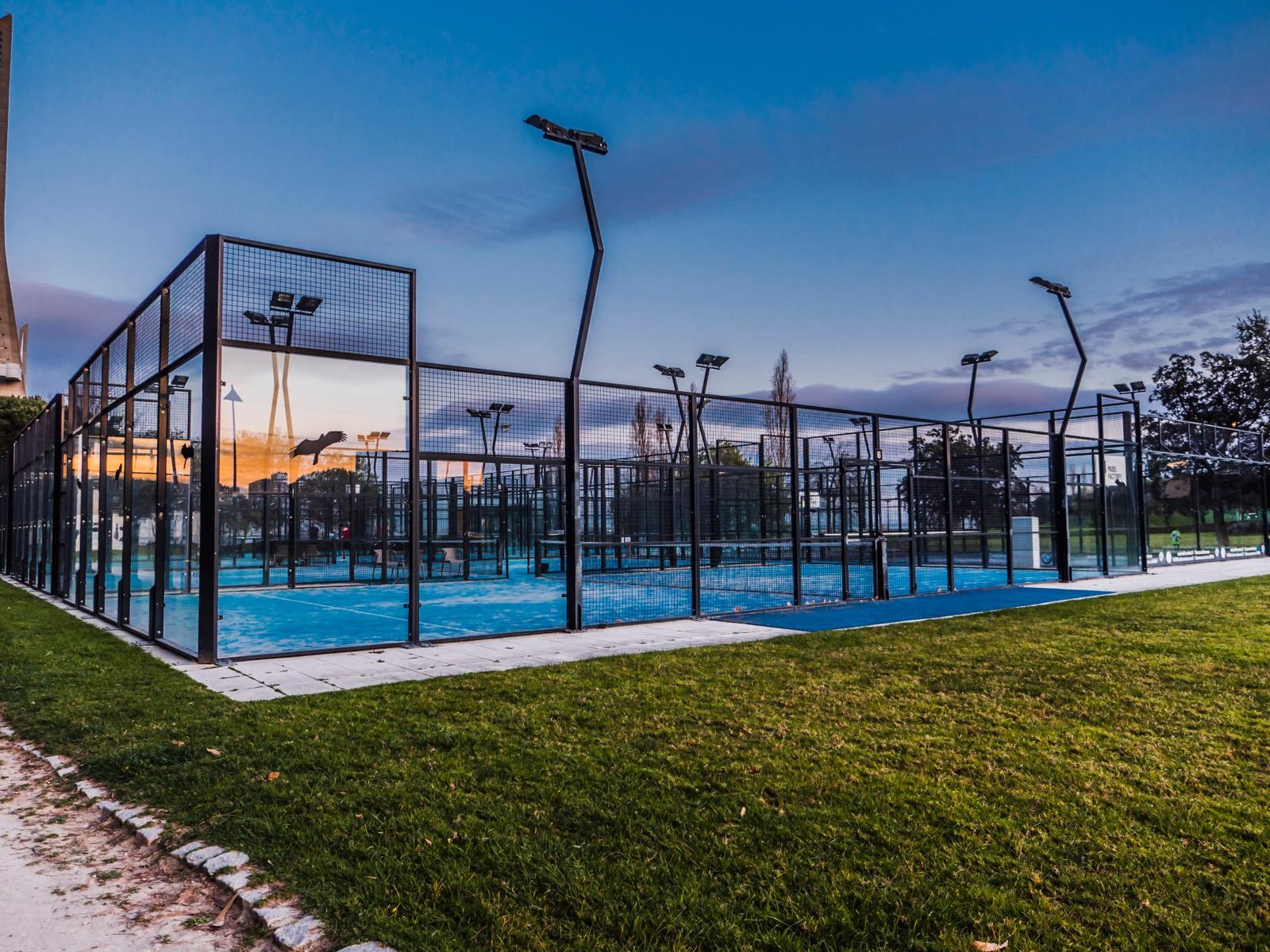
To run a padel tournament well, you make five decisions before anyone arrives: the format, the courts, the finish time, the seeding and the tie-break rule. Get those right and the night flows; skip one and it stalls.
This is the practical walkthrough, with a checklist at the end. For a social night with rotating partners, the Americano guide goes deeper on that one format.
In short
- Courts fill in blocks of four: 10 players on three courts is two courts in play and two people sitting out.
- In an Americano or Mexicano, time = rounds × match length: courts never shorten those nights; in a round robin the match count is fixed, so courts do.
- A round robin is T × (T − 1) ÷ 2 matches: 8 teams play 28, about seven hours on two courts at 30 minutes a match.
- A knockout is always teams − 1 matches: 11 teams play 10, with 5 byes for the top seeds in a 16-bracket.
- The tie-break is decided before the first serve: PadelLoop sorts on points, then point difference, then wins, then name.
How do you run a padel tournament, step by step?
- Choose social or competitive. Rotating partners and individual points, or fixed teams playing for a winner.
- Check courts against players. Players go on court in blocks of four, so count what actually fills.
- Do the time maths. Rounds × match length, and cut points or rounds until it fits the booking.
- Seed the field. Snake seeding for groups, top seeds to the byes in a knockout.
- Decide the scoring and the tie-break. Match length, deuce rule and what splits a tie, all announced before the start.
- Run the day. Check-in, a visible schedule, results entered as you go, and someone off court in charge of the clock.
Each step has its own section below.
Choose the right format
The first choice when you run a padel tournament decides the rest:
- Social tournament: Americano, Mexicano or Mixicano. Everyone plays a lot, no one is knocked out early, and it's easy to run.
- Competitive tournament: a group stage (pools) followed by playoffs (a knockout), or a pure knockout. This is about crowning a deserving winner.
If you have many teams and want everyone to get several matches, groups + playoffs is usually best.
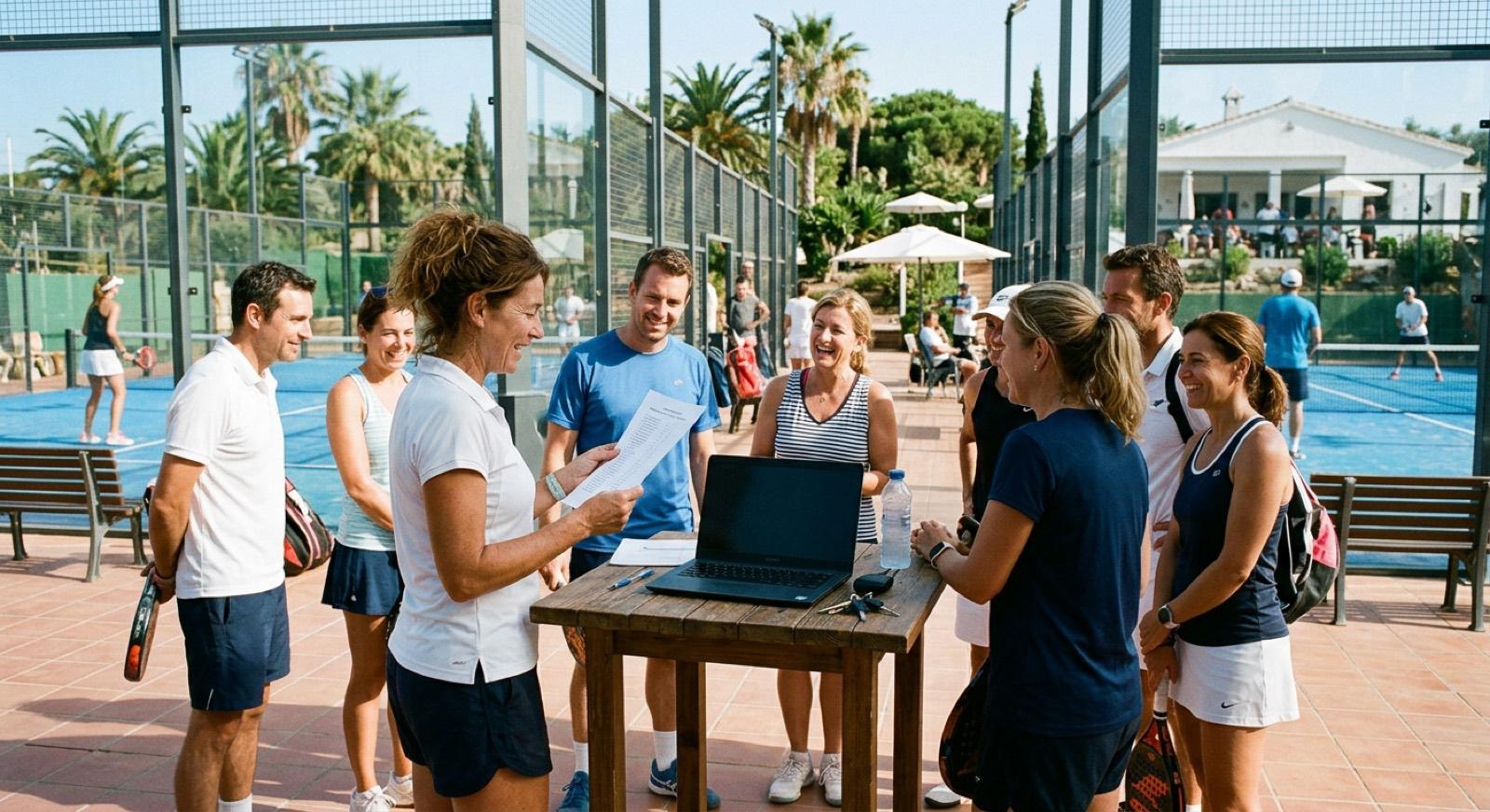
A useful test: if people are coming for the padel and the beer afterwards, run a social format. If they are coming to win something, run a competitive one. The way clubs get this wrong is by billing a knockout as a fun night, and then half the field goes home after 40 minutes.
 AI-generated image
How many players do you need per court?
Four per court. That much is obvious, but the consequence is stricter than most organisers expect: players go on court in blocks of four. Ten players on three courts is not two and a half courts of padel. It is two courts, eight players, two sitting out, and a third court standing dark.
The number on court each round is the largest multiple of four that fits both your player count and four times your courts:
| Players | Courts | On court | Sitting out | Courts in use |
|---|---|---|---|---|
| 8 | 2 | 8 | 0 | 2 |
| 10 | 2 | 8 | 2 | 2 |
| 10 | 3 | 8 | 2 | 2, one idle |
| 12 | 3 | 12 | 0 | 3 |
| 13 | 3 | 12 | 1 | 3 |
| 14 | 4 | 12 | 2 | 3, one idle |
So booking an extra court does nothing until you have four more players. If you pay per court, check this before you book, not after. The planner does the arithmetic for you.
How long will the tournament actually take?
Two numbers decide it: how long one match takes, and how many rounds you play.
For a social format played to a fixed number of points, reckon on roughly half a minute per point, plus a few minutes for changeovers and serving:
- 16 points: about 11 minutes
- 21 points: about 14 minutes
- 24 points: about 15 minutes
- 32 points: about 19 minutes
Then total time = rounds x match length. Note what is missing from that formula: the number of courts. Every court plays its round at the same time, so more courts don't shorten the night, they widen it. If you have to finish sooner, cut the points per match or cut the rounds. Nothing else moves the clock.
For reference, PadelLoop defaults to one round fewer than the number of players, capped at 12. Eight players gives seven rounds, a complete rotation. Twenty players would give 19, so it stops at 12, because nobody wants a 19-round night.
Fixed teams change the arithmetic completely, and it is worth doing on paper before you promise anyone anything. A round robin where every team plays every other is T x (T - 1) / 2 matches. Eight teams is 28 matches, which at half an hour each on two courts is seven hours. This is the most common way a club padel tournament runs off the rails: the format was fine, the maths was never done. With eight teams and two courts, play a group stage instead. The round robin guide has the match count for every field size.
How should you seed groups?
If you split into pools, you should seed them so the strongest teams don't end up in the same group. A common method is snake seeding: team 1 to group A, team 2 to group B, team 3 to B, team 4 to A, and so on. That makes the groups as even as possible.
After the group stage, the best teams advance to the playoffs. Cross-seed them so group winners face runners-up from other groups. That way you avoid the two best teams meeting too early.
Groups of four are the sweet spot: three matches each. Groups of three give only two, which is thin if someone drove an hour to get there.
Knockout and byes
In a pure knockout the bracket has to be a power of two: 4, 8, 16, 32. If your entry list isn't, the bracket rounds up to the next power of two and the gap is handed out as byes in the first round, given to the top seeds. Eleven teams means a 16-bracket with five byes, and those five go to seeds 1 to 5.
A knockout is always (teams - 1) matches, so eleven teams is 10 matches. That makes it the shortest competitive format to schedule, but half the field is done after one match. Use it as the playoff on top of groups, not as the whole event. If you want everyone to keep playing and still get a ranking, Monrad ranks eight pairs in three rounds without knocking anyone out.
Court schedule: what most often goes wrong
The most common bottleneck when you run a padel tournament is too few courts. Work it out in advance:
- How many matches have to be played in total?
- How long is each match? At club level a pro set to 8 games takes about 45 minutes, best of three sets about 75, and a super-tiebreak about 15.
- How many courts do you have?
With limited court time, you should choose short match formats, a pro set or super-tiebreak rather than best of three. See the padel scoring guide for the options.
Then add slack. Matches run long, someone is in the toilet, someone can't find their partner. Five minutes per round sounds like nothing, and across nine rounds it is the difference between finishing on time and finishing 45 minutes late. Run a visible round timer and start the next round on it, even if one court is still finishing a point.
Points and rule variant
Decide before the start:
- Match length: one set, best of three, a pro set or a super-tiebreak.
- Deuce: golden point (fastest), star point or traditional advantage.
Communicate this clearly to the players, and ideally show the rules on a screen.
 AI-generated image
How do you break a tie in the standings?
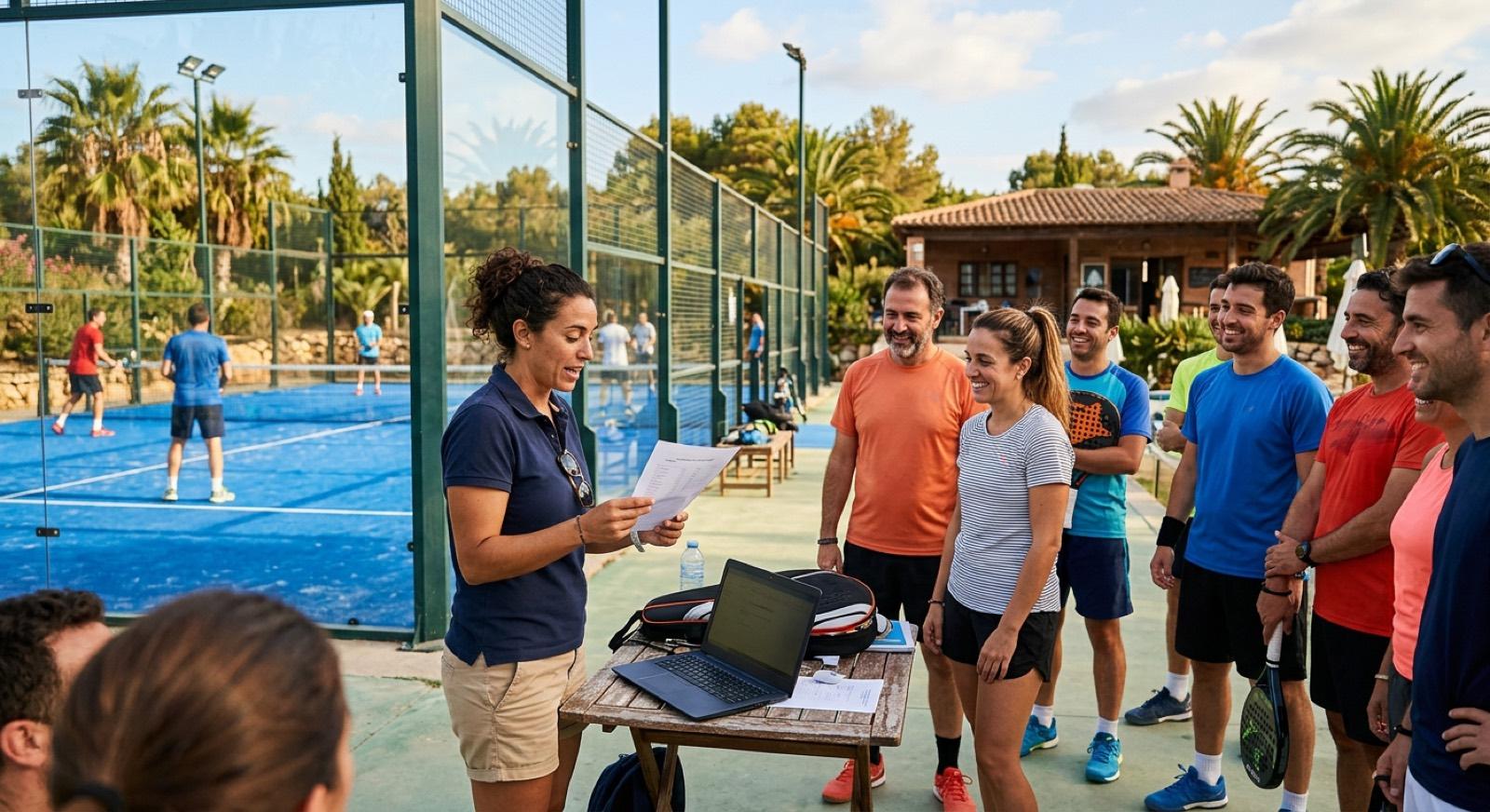
PadelLoop sorts on points, then point difference, then wins, then name; decide yours before the first serve, not while two players stand in front of you at the prize-giving.
In Americano and Mexicano the points are individual: you carry the points your team scored in every match you played. PadelLoop's live standings sort on points first, then point difference (scored minus conceded), then number of wins, then player name.
There is a catch in a fixed-points format. Every match ends on the same total, so two players who played the same number of matches and have the same points also have the same difference. Difference only separates players who played a different number of matches, which happens when sit-outs are uneven. On an even night, wins decide, and after that the name.
That last step is the one to know about. If two players are level on points, difference and wins, PadelLoop orders them by name. That is a deterministic tie-break, not a verdict, and in a short tournament it happens more often than you would guess. If a trophy is on the line, say in advance what you will do about it. The simplest answer is a decider between the players who are level: one golden point, or a short super-tiebreak.
The round robin with fixed pairs uses the club convention: 2 points for a win, then point difference, then total scored. There is no draw to price: none of the match formats PadelLoop offers can end level, and a tied result is treated as unfinished, so the match stays out of the table until you enter a winner. Head-to-head reads well on paper and is a trap in a three-way tie, where A beat B, B beat C and C beat A. Point difference has no such failure mode, which is why most formats reach for it first.
What happens when someone drops out or doesn't show?
A reserve player on standby is the best answer; otherwise you play on with one fewer, which a social format takes in its stride: one more person sits out each round. This is the thing that actually goes wrong, far more often than anything to do with brackets. For fixed teams in a knockout, a no-show is a walkover and there is no clever way around it.
Set the rule in advance and put it on the board: check-in closes before the first round, and a pair not on court within ten minutes of its start time forfeits that match. Ten minutes is also the walkover rule in the FIP rulebook. This is unpopular exactly once, and then people are on time for the rest of the season.
If you run a padel tournament in PadelLoop, know this before you rely on it: the player list is locked once you hit start. Mexicano still builds each round from the results already entered, so the table keeps driving the matches, but a player who goes home mid-night means tapping Edit setup and starting again with the shorter list, which wipes the results entered so far. Close the roster at check-in and you never meet the problem. The one exception runs the other way: in King/Queen of the Court a pair that turns up late can be added while the night is running, and it joins the back of the queue.
On the day itself
- Check in the players and confirm the teams before the first match.
- Show the schedule on the big screen so everyone knows when and where they play.
- Record results as you go. Don't wait until the end.
- Have someone clearly in charge of the timetable.
Two more that only show up with experience. Keep the warm-up short and say so out loud, because warm-ups expand to fill whatever time you leave them: the FIP rules set the warm-up at three minutes, and that is plenty on a club night too. And put someone on the clock who isn't playing. An organizer in the middle of a 24-point match is not organizing anything.

Checklist
- Format chosen (social or competitive)
- Number of teams/players confirmed
- Court blocks of four checked (an extra court needs four more players)
- Total match count and finish time worked out
- Groups seeded (if there's a group stage)
- Match length and deuce rule decided
- Tie-break announced before the start
- No-show and grace-period rule on the board
- A court schedule that fits the time, with slack per round
- Big screen for the schedule and results
- Someone responsible for running it, and not playing
- Prizes / closing
How to run a padel tournament in PadelLoop
PadelLoop handles the tedious parts: the rotation, the sit-outs, the live standings and the screen in the hall. It runs Americano, Mexicano, Mixicano, Team Mexicano, Team Americano, a round robin with fixed teams, King/Queen of the Court, Monrad (the Swiss system) and a seeded knockout with a B playoff. You enter one number per team per match, and the table sorts itself.
Worth knowing before you lean on it:
- The rotation spreads the sit-outs. No one sits out more than one round more than anyone else, and it works to avoid giving anyone the same partner twice.
- Mexicano pairs off the table. Within each court of four, the best and the weakest play against the two in the middle, so matches stay tight as the night goes on.
- The screen in the hall is a URL. You open a link on a TV in the venue and it updates as results are entered. No Chromecast, no AirPlay, nothing to install. The same link shares the table with the players.
- The player table exports to CSV (rank, player, played, wins, points, difference) when it's done.
- The export is the social formats only, and the hall link nearly so. Americano, Mexicano, Mixicano, Team Mexicano and Team Americano get the hall link and the export. King/Queen of the Court gets the hall link, with the courts, the queue and the crowns updating live, but no export. The fixed-teams round robin, Monrad and the knockout keep their table on the one screen: no hall link, no export. Worth knowing if one of those three was your plan.
Plan around the gaps, too. A group stage feeding a playoff is the one still missing: the engine exists and is tested, but it is not wired to the interface yet. A straight padel knockout is in, with seeding, byes for the top seeds and a B playoff for the pairs that lose their first match. Ball-by-ball scoring already exists, but as a separate match scoreboard for one match at a time, with games, sets, golden point and star point, rather than inside the tournament runner. Until groups land, run the group stage on a sheet and let PadelLoop take the playoff.
If you've settled on a social night, the Americano guide goes deeper on the rotation. If you're considering a fixed, ongoing ranking in the club instead of a single tournament, see the guide on the padel ladder.
How to run a padel tournament: common questions
How many courts do I need for a padel tournament?
One court per four players, and courts only fill in blocks of four. Ten players on three courts is two courts in play, eight players on court and two sitting out, with the third court dark. So an extra court does nothing until you have four more players. Check that before you pay for it.
How long will a padel tournament take?
Rounds × match length. At about half a minute per point plus changeovers, a match to 16 points takes around 11 minutes and 24 points about 15. In an Americano or Mexicano courts are not in the formula; cut points or rounds to finish sooner. In a round robin or group stage, time = matches ÷ courts × match length.
How many matches are there in a padel round robin?
T × (T − 1) ÷ 2 for T teams, so 8 teams play 28 matches. At 30 minutes a match on two courts that is seven hours, which is how club tournaments run off the rails. With eight teams and two courts, play groups instead. A knockout, by contrast, is always teams − 1 matches.
How do you break a tie in a padel tournament?
Point difference first in PadelLoop's tables: the Americano and Mexicano table ranks on points, then difference, wins and name, and the round robin on 2 points a win, then difference and points scored. Decide it before the first serve, and if a trophy is on the line, announce a decider, such as one golden point.
What happens if a player drops out halfway through a padel tournament?
A reserve is the best answer; otherwise play on with one fewer and one more person sits out each round. In PadelLoop the player list locks at start, so put a stand-in on court under their name, or tap Edit setup and remove them, which wipes the results entered so far. Close the roster at check-in.
How do you seed groups in a padel tournament?
Snake seeding: team 1 to group A, 2 to B, 3 to B, 4 to A, and so on, which keeps the groups even. After the groups, cross the playoff so group winners meet runners-up from other groups. Groups of four give three matches each, the sweet spot; groups of three give only two.
How do byes work in a padel knockout bracket?
The bracket rounds up to the next power of two, 4, 8, 16 or 32, and the gap becomes first-round byes for the top seeds. Eleven teams make a 16-bracket with five byes, for seeds 1 to 5. A knockout is always teams − 1 matches, but half the field is out after one match.
Should I run a social or a competitive padel tournament?
Social if people come for the padel and the beer afterwards: Americano, Mexicano or Mixicano, where nobody is knocked out early. Competitive if they come to win something: groups then playoffs, or a knockout. The classic mistake is billing a knockout as a fun night, and then half the field goes home after 40 minutes.